

Long ago, there lived a demon king named Ravana. A figure of immense power and intellect, Ravana had ten heads, symbolising his vast knowledge and ambition and also contemporarily representing ten qualities. He ruled the kingdom of Lanka.
However, his unmatched strength and accomplishments were overshadowed by arrogance. He believed he was invincible, having received a boon from the creator god Brahma after years of intense penance. This boon rendered him immune to harm from gods, demons, and celestial beings — those he regarded as the most powerful. Yet, in his pride, Ravana dismissed humans as weak and insignificant, excluding them from consideration when seeking protection.
Ravana’s reign of terror grew unchecked until the gods, alarmed by his tyranny, turned to Lord Vishnu, the preserver of balance in the universe. They sought his intervention to restore harmony. Vishnu listened as the gods recounted Ravana’s conquests and cruelty. They explained the boon Ravana had received and the critical oversight in his arrogance: he had excluded humans from his immunity.
The gods declared, “It is only as a human that Ravana can be defeated.“
Understanding that even the mightiest fall due to their hubris, Vishnu resolved to descend to earth in human form as Rama, setting the stage for an epic tale of justice.
This story, central to the ancient Indian epic Ramayana, carries profound lessons that resonate across cultures and ages. Ravana’s disregard for humans led to his ultimate defeat, a stark reminder of the dangers of underestimating the seemingly insignificant.
In modern terms, this is equivalent to ignoring people you think are not significant enough to challenge you or pose a threat. In business terms, these could be small, emerging competitors in a market. Undervaluing the quiet team member with untapped potential or neglecting minor but critical vulnerabilities in a strategy can be dangerous. The unthinkable can often stem from the overlooked, and the unprepared are exposed.
Ravana’s downfall also underscores the perils of unchecked pride. Despite his brilliance and accomplishments, his arrogance blinded him to his limitations. He failed to respect the interconnectedness of life, where even the most minor player can alter the course of events. In today’s world, this is a cautionary tale for anyone in positions of influence or power. Success is not a shield against failure; humility is as essential as competence in navigating life’s complexities.
Ravana’s story is a lesson in preparation and vigilance for individuals and organisations alike. Just as his overconfidence in his boon left him vulnerable, relying too heavily on a single strength — a specific skill, market, or resource — can create blind spots.
Diversification, adaptability, and an openness to unexpected challenges are vital for resilience. In personal life, this might mean developing a broad skill set or maintaining a solid support network. It could involve anticipating market shifts or embracing innovation to stay ahead in business.
The story also illustrates the value of respect — respect for others, for the world around us, and the uncertainties of life. Ravana’s failure to recognise the power of humans cost him his kingdom and his life. In the global context, this is a call to appreciate diversity, honour all contributions, and recognise the potential in every person and situation. Disregarding the seemingly insignificant can lead to missed opportunities or unforeseen threats.
About the author
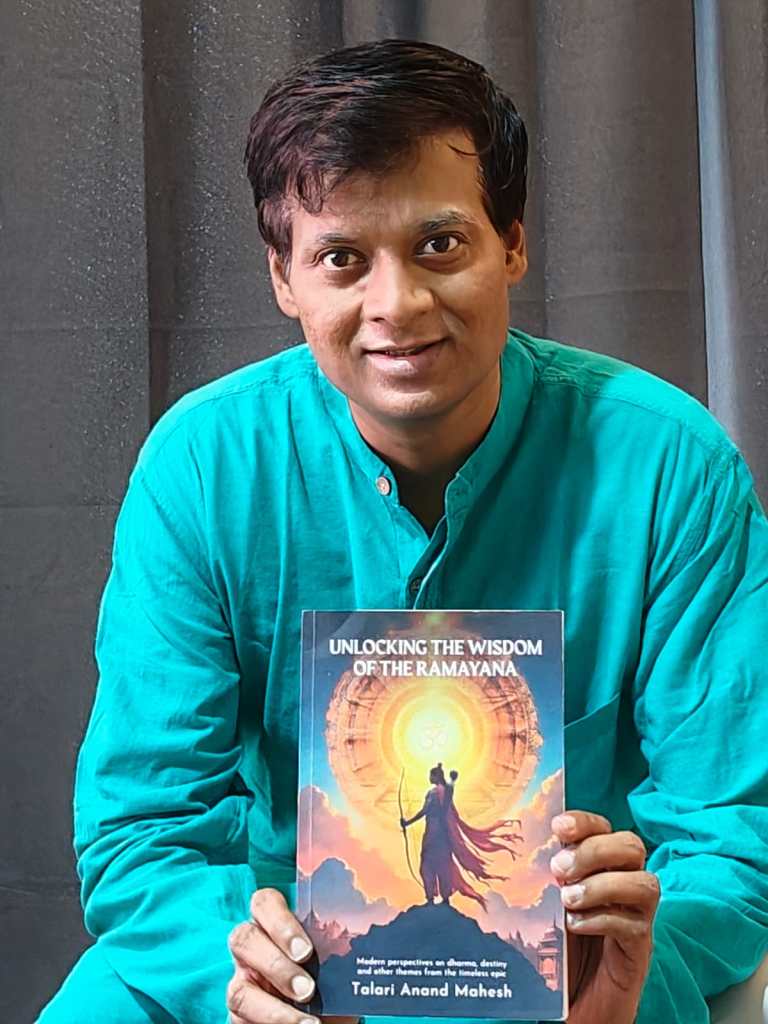
Talari Anand Mahesh
Anand is an award-winning communications professional and reputation management consultant with nearly two decades of experience. Having worked with some of India’s leading media firms and heading his own communications consulting firm, he has had the privilege of engaging with extraordinary personalities—including business leaders, motivational speakers, educationists, authors, and Yogis.
 UWOR – Books & Insights by Anand Mahesh | Unlocking The Wisdom Of The Ramayana